
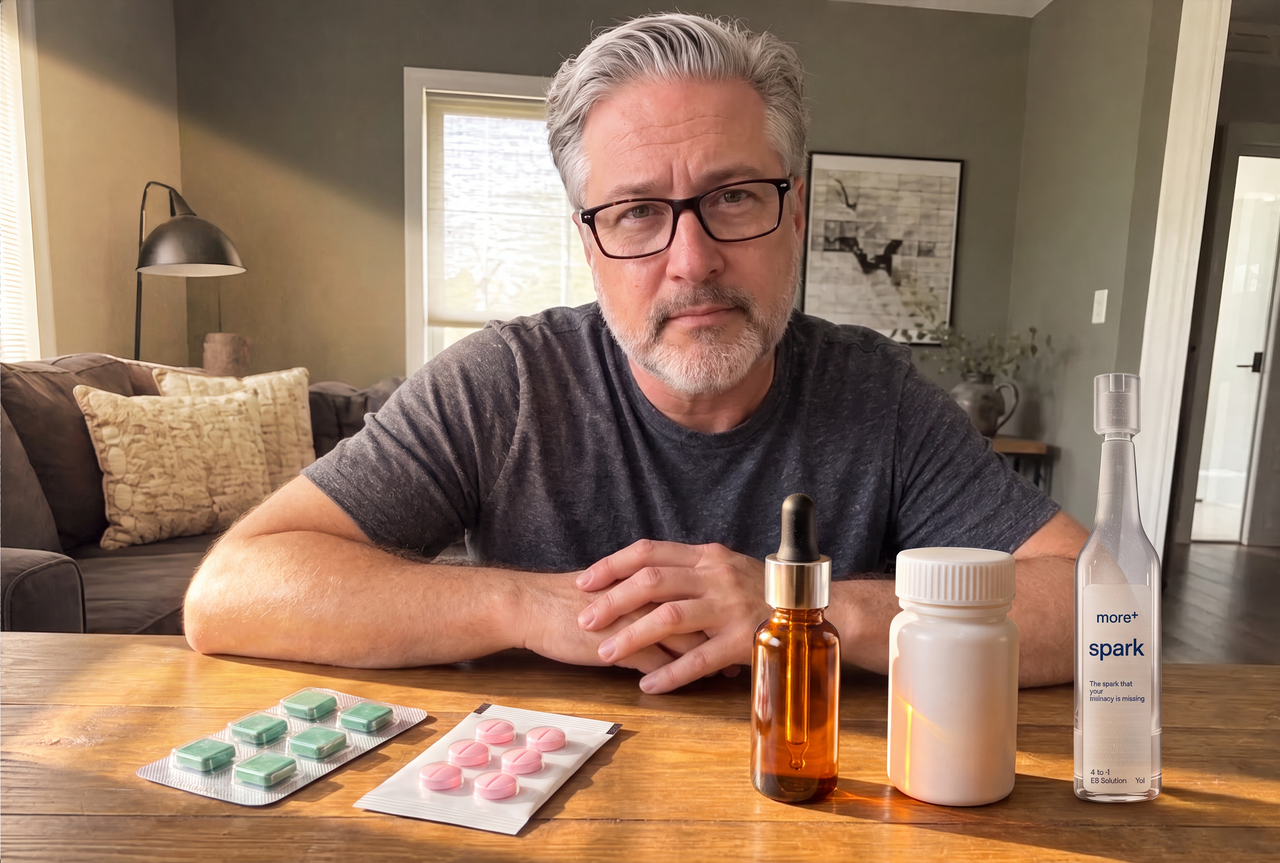
It Was Never You. It Was the Treatment.
We had a US-licensed physician review the four most-prescribed online performance protocols for 30 days. Three treated the body and ignored the part that actually starts everything. One didn't.
Most men who think the problem is them have only ever tried half a treatment. Here is what the review found, and why one protocol was built differently.
By Sarah Chen, Editor-in-Chief · May 27, 2026
Reviewed by Prof. Marcus Hale · Verified Medical Reviewer
What the Review Kept Running Into
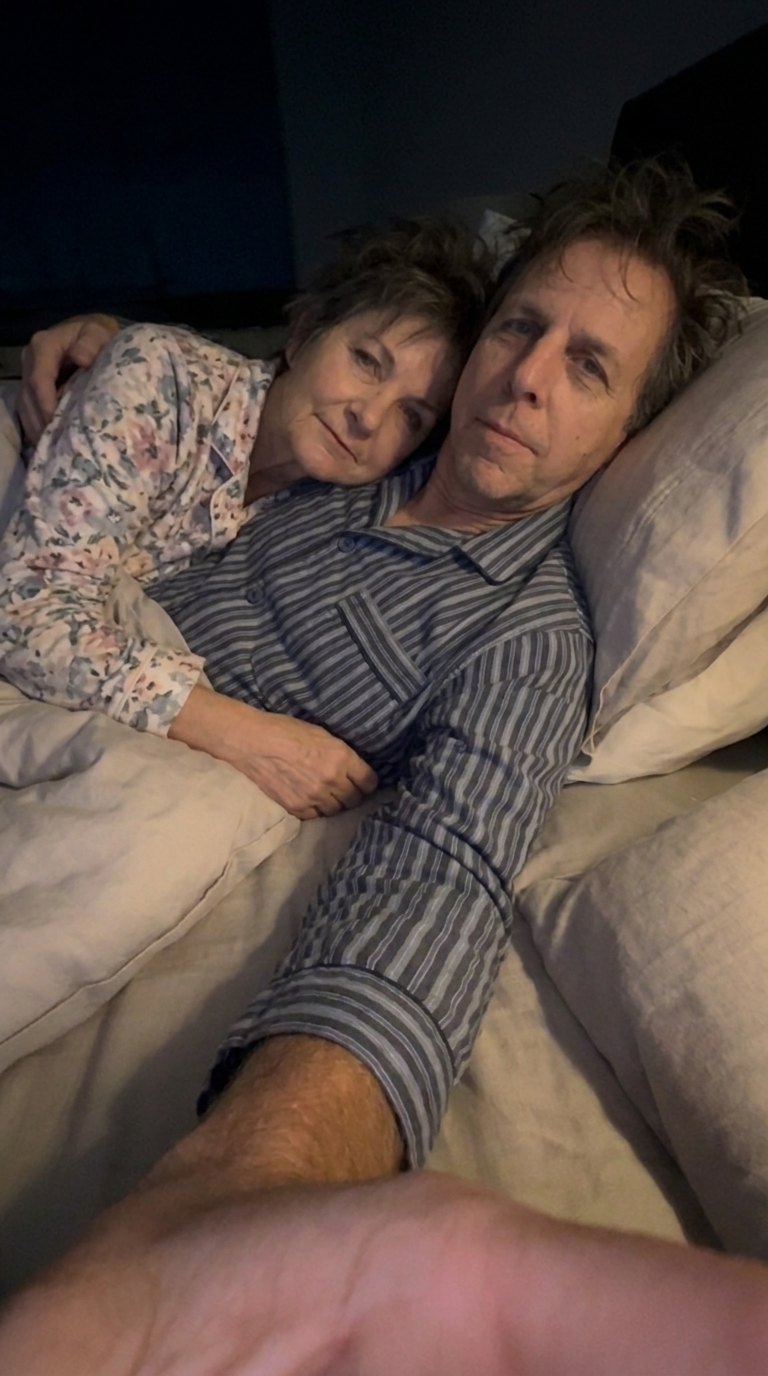
Not a physical failure. A quiet withdrawal.
Across the men in this category, the pattern was almost always the same. The treatments they had already tried worked on paper and let them down in the moment, so they stopped planning the evenings where it might matter.
They found reasons. An early start, a long day, one more drink. The avoidance looked like circumstance. It was actually a man managing something alone and deciding it was easier not to try than to be disappointed again.
What the review found is that this is rarely about the body. Single-ingredient treatments only ever addressed performance. They never touched desire, and desire is where the whole thing starts.
It was never his. It was a treatment built to do half the job.
The four-in-one protocol was designed around that gap. Not stronger. Complete.
Questions We Addressed Before Testing
This is the most common question, and the honest answer is yes, for a specific reason. Viagra and Cialis address one thing: blood flow to the body. They were never built to touch desire, which starts in the brain. For a large share of men, the body was never the problem. The four-in-one protocol addresses both, which is the part single-ingredient treatments left out. That is the difference, and it is mechanical, not marketing.
Billing appears under a discreet descriptor, not the product name. Nothing on your statement identifies the treatment or the condition. Privacy is handled the same way the physician review is: as standard practice, not a favor.
No. Despite the name, Apomorphine is not an opioid and is not derived from morphine. It works on dopamine, the brain's desire pathway, which is the mechanism single-ingredient treatments ignore entirely. It is prescription medicine, reviewed and prescribed by a US-licensed physician for each patient. Safety is assessed during that review, which is what the assessment is for.
A fair question, and the answer is that legitimacy comes down to physician governance. A real platform routes every patient through a US-licensed physician who reviews the assessment and decides what, if anything, to prescribe. No review, no prescription. That is the line between medicine and marketing, and it is the standard this protocol operates under.
Yes, under telehealth standards. A US-licensed physician reviews your assessment, your history, and your eligibility before anything is prescribed. The in-person visit is replaced by a thorough written review, not removed. If the physician determines it is not appropriate for you, it is not prescribed.
Compounded formulations use the same active ingredients, prepared by a licensed pharmacy for the individual patient. The four-in-one combines four mechanisms that no single branded product offers together, which is the entire point of the protocol. A note on regulation: compounded medications are prepared by licensed pharmacies and are not FDA-approved as a finished product, which is standard for compounded prescriptions.
Start My Physician Review →
3-minute assessment · Physician-reviewed · US-licensed doctors
Compounded medications are prepared by licensed pharmacies and are not FDA-approved as a finished product. Prescriptions are issued only after review by a US-licensed physician and only where clinically appropriate. Viagra, Cialis, and Levitra are registered trademarks of their respective owners and are not affiliated with this product.
The Reframe
Single-ingredient treatments were only ever built to do one thing: handle the body. They never touched desire, and desire is where it actually begins. So when they underdelivered, most men blamed themselves.
The review started from a different question. Not "which pill is strongest," but "which protocol was designed for how a man actually works."
What Actually Determines Whether an ED Treatment Works
An erection requires two systems operating in concert. Most treatments only ever addressed one of them. That single gap explains why so many men who did everything right still felt let down.
01 · The Vascular System
Smooth muscle relaxes. Blood pressure builds within the corpus cavernosum. This is the physical architecture of arousal, and it is where PDE5 inhibitors like sildenafil, tadalafil, and vardenafil work. Well studied, and effective for most men who use them correctly. For this system, the older single-ingredient treatments do their job.
02 · The Neurological System
Desire begins in the brain, in the dopamine pathway, before the body is involved at all. Dopamine fires in the paraventricular nucleus of the hypothalamus. The brain sends the initiating signal. Desire, not just physical readiness, but the felt experience of wanting, comes online here. PDE5 inhibitors do nothing for this system. This is the part single-ingredient treatments leave untouched, and for many men it was the part that was the problem all along.
Single-ingredient
Body only
Four-in-one
Brain and body
Approximately 30 percent of men do not respond meaningfully to PDE5 inhibitors alone. Of the 70 percent who do respond on the vascular side, a clinically significant subset report a persistent disconnect. The body is present, but the mind is not fully engaged. The literature identified this gap in the early 2000s. The clinical answer was always a combination protocol: a PDE5 inhibitor paired with a centrally acting dopamine agonist. The pieces existed. What was missing was a protocol that combined them and an economic model that made it viable to deliver. Most of the online ED market has continued to ignore it.
Here is what we found.
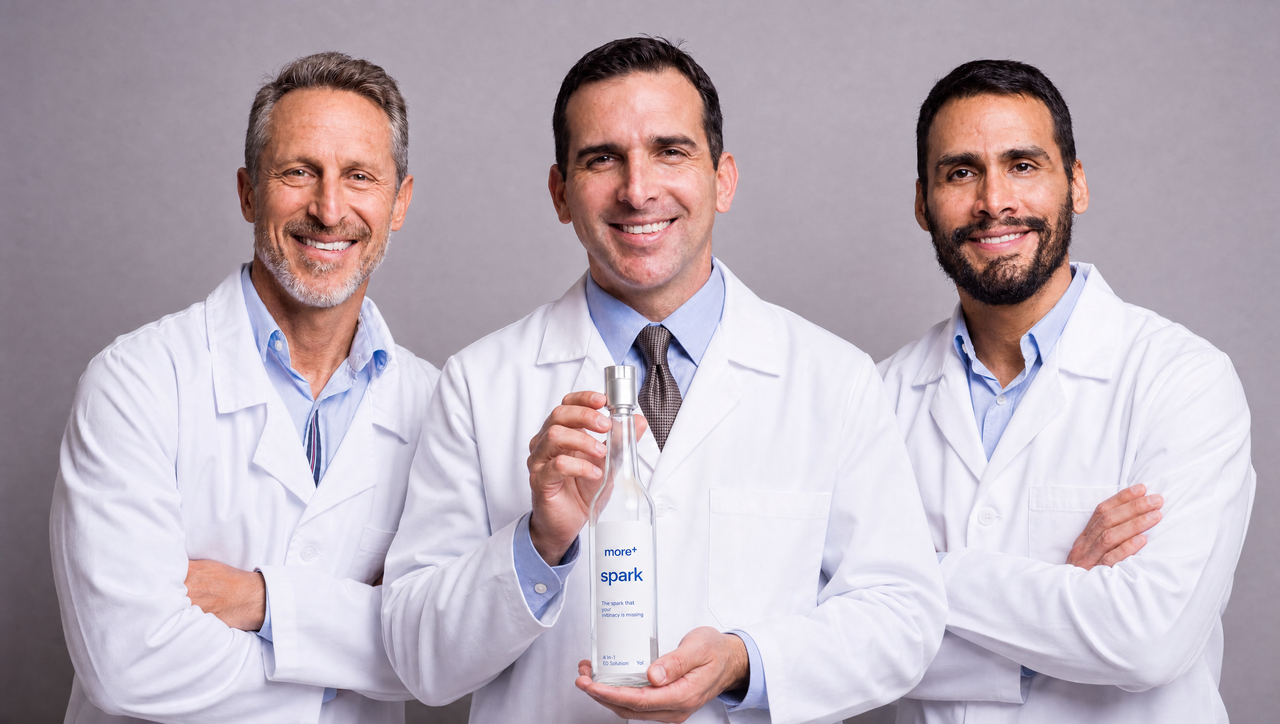
Reviewed by Prof. Marcus Hale
The four dimensions we scored
We evaluated the four protocols across four dimensions:
Active ingredients. Does the formula address both systems, or only the vascular pathway?
Time to onset. Minutes from administration to physiological effect.
Duration. The usable response window.
Tester experience. David's structured daily journal across 30 days.
Editor's note
Because MORE Spark is the only formula in this evaluation that addresses the neurological arousal gap directly, we reached out to the manufacturer on behalf of readers of this review.
Start My Physician Review →
3-minute assessment · Physician-reviewed · US-licensed physicians
How We Tested
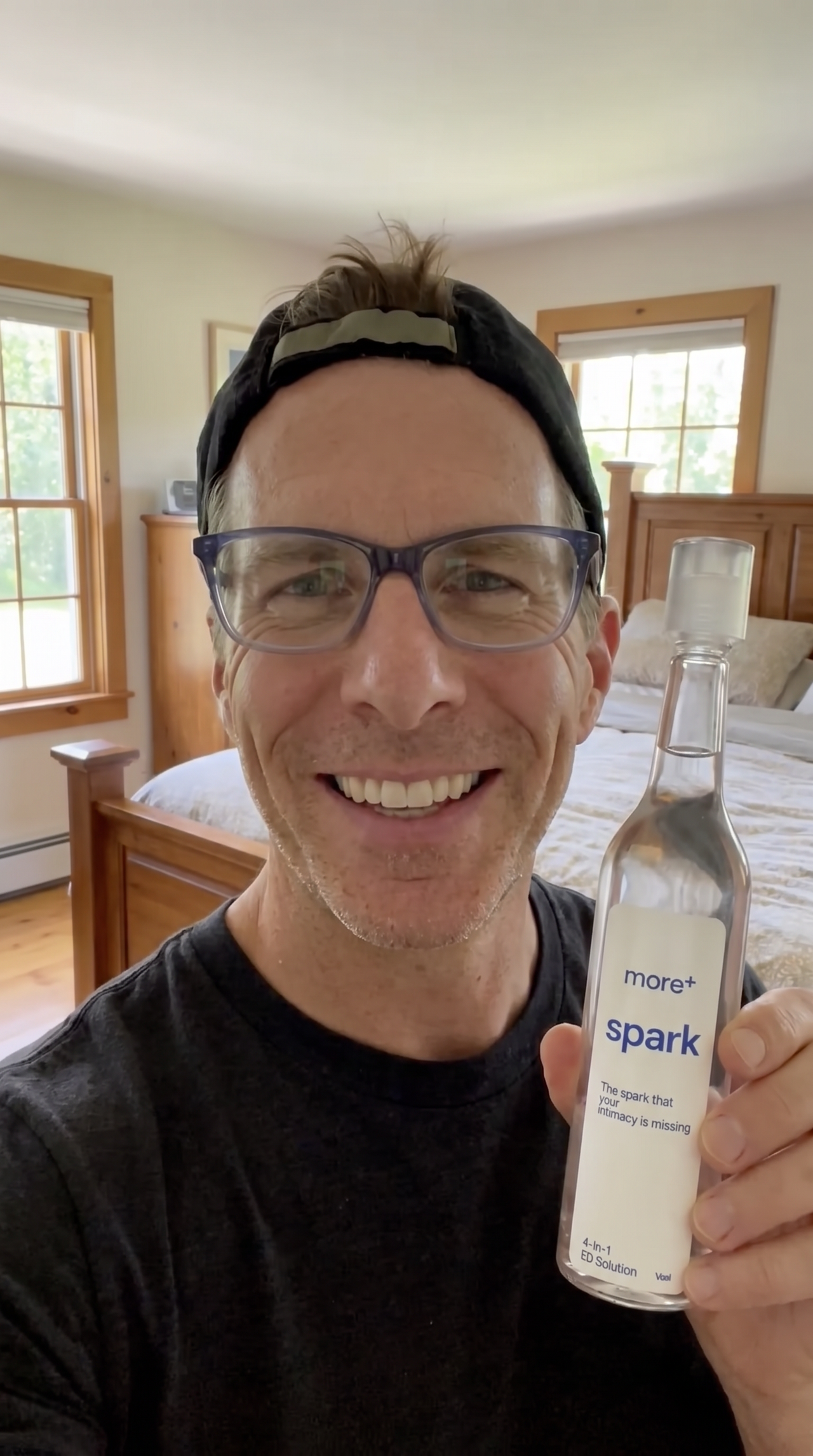
David is 54. He has experienced moderate ED for approximately three years. Blood pressure controlled. No nitrates. No cardiovascular contraindications. Cleared by his primary care physician to participate in the protocol.
He took each of the four products on a rotating schedule across a 30-day window. Same time of day, same baseline conditions, with a minimum of 48 hours between doses to eliminate carryover effects. He logged onset, duration, perceived intensity, and any side effects in a structured journal that Prof. Hale reviewed at the midpoint and at the conclusion of the trial.
This is one man's experience under one protocol. It is not a clinical trial and individual results vary. What it offered was something most reviews do not: a controlled, day-by-day account from a single patient holding every variable steady except the treatment itself.
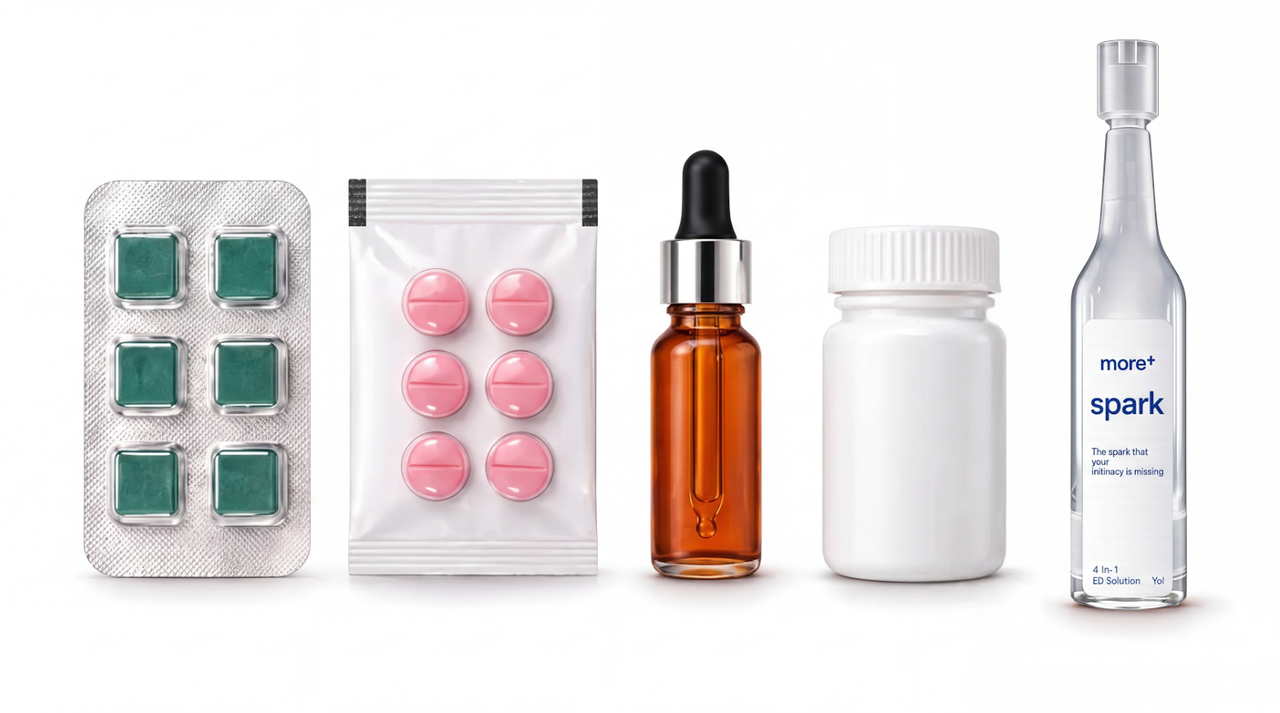
The Four Protocols We Evaluated
Every protocol here treats the body. Only one also treats the brain, which is where desire begins. That is the line separating them.
01
Editor's Pick
MORE Spark
Sublingual drop. Four actives, physician-prescribed.
✓ Brain and body
02
Leading sublingual protocol
Sublingual tablet. Two actives.
✗ Body only
03
Popular chewable protocol
Chewable. Two actives plus B12.
✗ Body only
04
Subscription chewable protocol
Chewable. Two actives.
✗ Body only
The four-active formula is prescription medicine, reviewed and prescribed by a US-licensed physician for each patient. More complete, and governed the same way any prescription should be.

What Changed for David
David logged 30 days across four protocols. The daily numbers are in the methodology above. What the numbers could not capture is what he wrote on Day 11.
Day 11, When the Gap Opened
"We were on the sofa. I hadn't taken something an hour ago and been waiting. I'd taken it 15 minutes ago. And it wasn't a switch flipping. It was the whole room getting louder. I wasn't auditing it. I wasn't monitoring myself. It was just there."
First time in over a year he hadn't been managing the outcome in advance.
— David, tester, 54
“
I stopped managing my own evenings. I stopped having the third drink to loosen up. I stopped suggesting the late dinner so the timing would work. I'd been planning around an outcome for a year and a half, and I didn't realize the planning itself was what was wearing me down.
— David, tester, 54
This was the part the other protocols never reached. Not the performance. The planning. The quiet, constant managing of a fear. That is what the four-active formula was built to end.
One man's experience, and individual results vary. But the gap David described is the exact gap single-ingredient treatments leave open.
Start My Physician Review →
3-minute assessment · Physician-reviewed · US-licensed physicians
The Apomorphine Difference
The reason MORE Spark closes a gap the other three protocols don't is the fourth active ingredient.
Sildenafil, tadalafil, and vardenafil are PDE5 inhibitors. They relax vascular smooth muscle so blood can flow. They are effective, well-characterized, and address the physical architecture of arousal with precision.
Apomorphine is categorically different.
It is a centrally-acting dopamine agonist. It crosses the blood-brain barrier and stimulates D2 receptors in the paraventricular nucleus of the hypothalamus, the region where the male sexual response is neurologically initiated. It is not a stimulant. It bears no pharmacological relationship to Viagra. It is the molecule the urology literature identified, more than two decades ago, as the missing half of the equation for men whose vascular response is intact but whose neurological arousal signal has gone quiet.
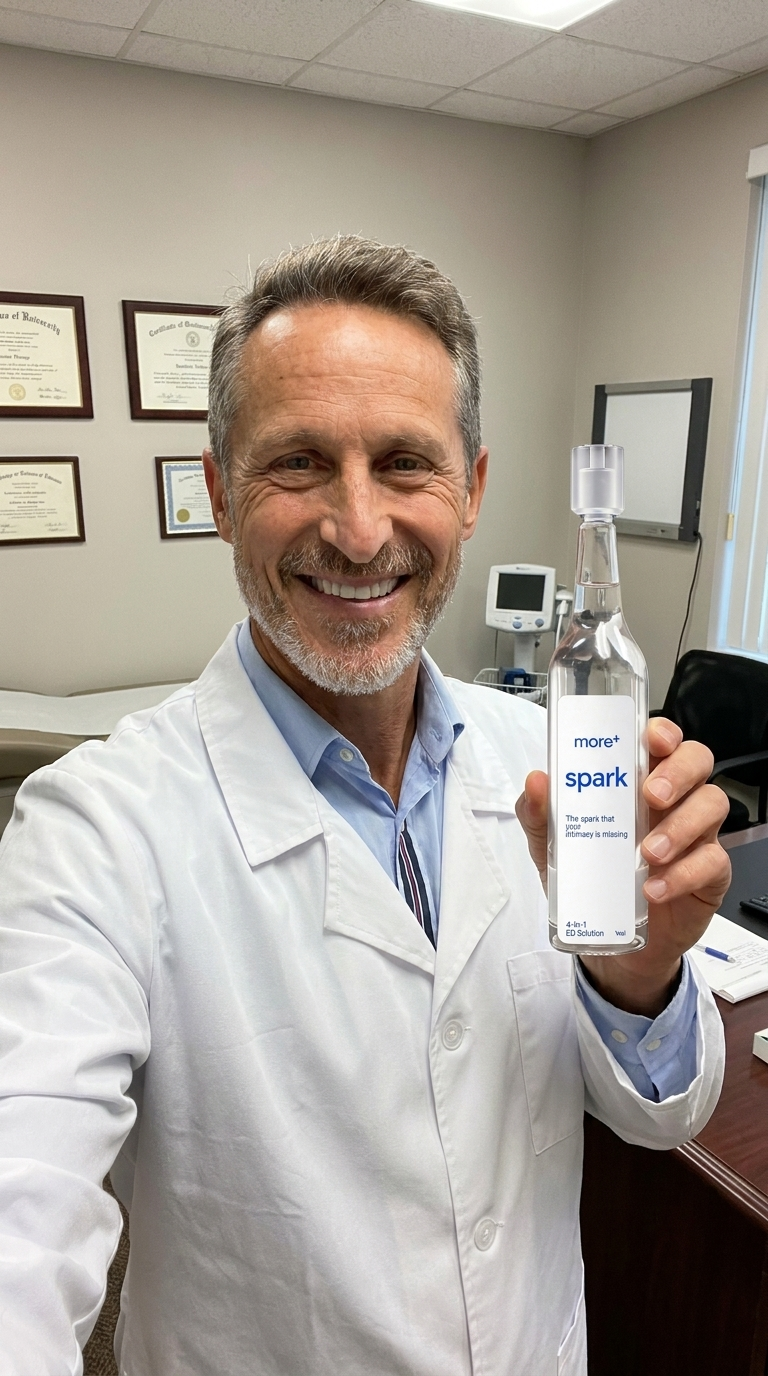
"The combination of a PDE5 inhibitor with a centrally-acting dopamine agonist has been supported by the urology literature for over two decades. The reason it hasn't been widely available isn't clinical. It's commercial. The molecules are off-patent. Nobody could build a branded product around them. MORE Spark is the first widely available US telehealth protocol to put the combination back into practice."
Prof. Marcus Hale
Professor of Urology · Verified Medical Reviewer
The combination protocol has been supported in the literature for two decades. The molecule is off-patent and was impossible to monetize as a branded product, so the market kept selling single-pathway solutions to men with a two-pathway problem. MORE Spark is the first widely available US telehealth protocol to restore it to the formula.
Delivery and Onset
The sublingual drop dissolves under the tongue in under a minute and bypasses first-pass metabolism, which is what gives MORE Spark its onset advantage over chewable and swallowed tablet formats. No water required. Discreet, neutral in taste, and ready in about 15 minutes, so it works after food or a drink.
Safety
Apomorphine and the PDE5 actives have well-documented safety profiles within their compound classes: most commonly mild headache, transient flushing, and nasal congestion on dosing days. This is prescription medicine. A US-licensed physician reviews your history and eligibility before it is prescribed, and determines whether it is appropriate for you.
Start My Physician Review →
3-minute assessment · Physician-reviewed · US-licensed physicians
About the Medical Reviewer
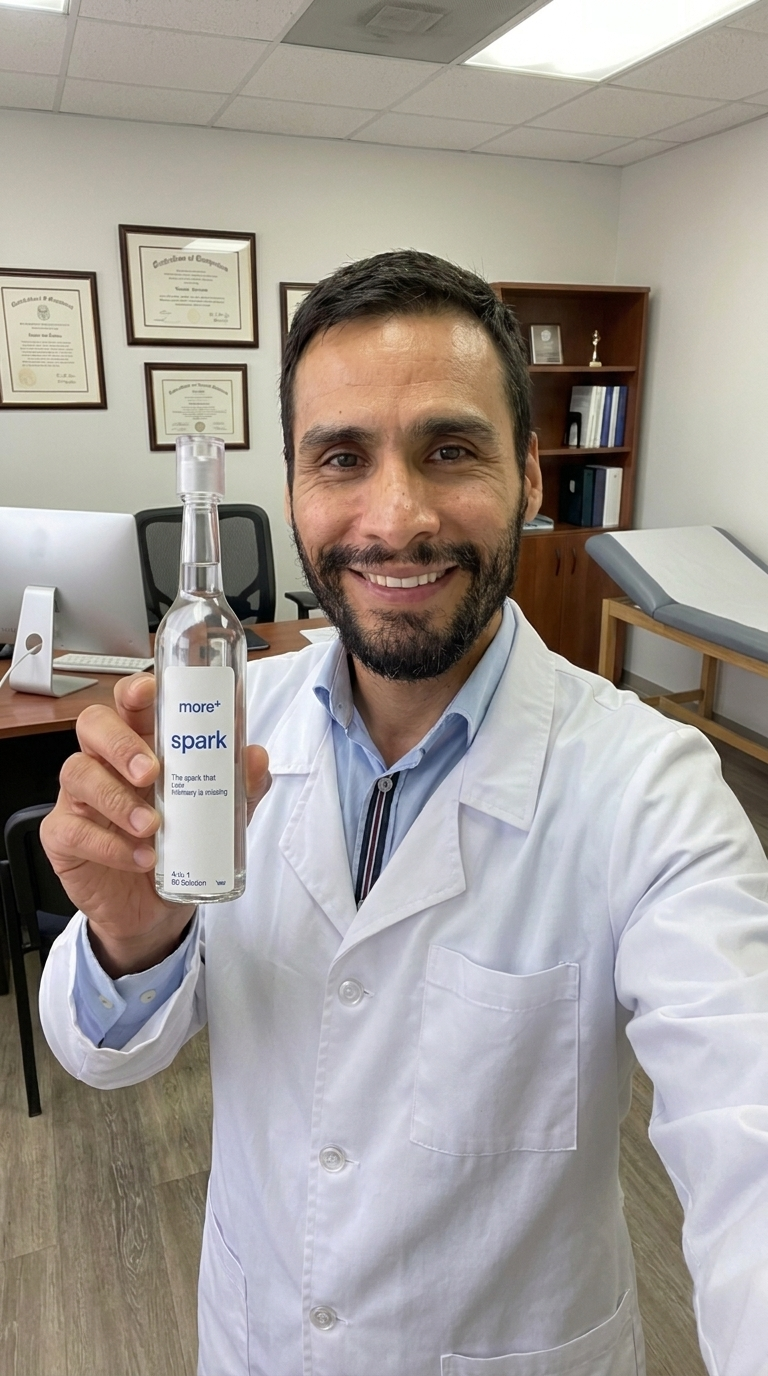
Prof. Marcus Hale
Professor of Urology · Verified Medical Reviewer
Prof. Hale is a board-certified urologist with 18 years of clinical experience in male sexual medicine. His work has focused on the distinction that defines this protocol: the difference between the vascular and neurological systems in the male sexual response, and why treatments addressing only one leave a significant share of men without a full result.
He has reviewed the clinical evidence across PDE5 inhibitors, dopamine agonists, and combination protocols, and he medically reviews the clinical and pharmacology content on this platform.
Prof. Hale's credentials and board certification are publicly verifiable. View credentials
The combination of a PDE5 inhibitor with a centrally acting dopamine agonist has been supported by the urology literature for over two decades. The reason it hasn't been widely available isn't clinical. It's commercial. MORE Spark is the first widely available US telehealth protocol to put the combination back into practice.